Featured Articles

Meet the Winners of the 2023 Musicworks Electronic Music Composition Contest TORONTO, CANADA, April 22, 2024: San Francisco-based composer Ningxin Zhang has won first prize for her composition Kagemusha: for Pipa and Electronics. “I am deeply honoured to have received the first prize in the 2023 Musicworks Electronic Music[...] Read more

Jessica Moss Explores the Orchestra Within If there is a through line connecting traditional Eastern European klezmer, indie rock, and experimental drone music, it can be found in the work of Jessica Moss. Whether her music is acoustic or electronic, post-rock or post-classical, a stark and dramatic amplified violin performance or a[...] Read more
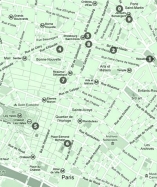
Paris, France On June 21, 1982, the French Ministry of Culture introduced the first Fête de la Musique (meaning celebration/feast of music, and a homophone of Faites-musique—make music), a large street party where musicians reignite ancient pagan solstice rituals in spontaneous concerts[...] Read more

MUSICWORKS UNVEILS 2017 CONTEST WINNERS Musicworks is thrilled to announce the winners of its 2017 contests. Erik Ingalls’ The Gravity of Plim has won first place in Musicworks’ 2017 Electronic Music Composition contest. Ingalls’ winning piece began as an accompaniment to a science-fiction[...] Read more
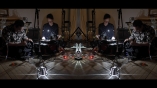
Mystery & Wonder Records: Extending the Sound A striking musical and visual aesthetic distinguishes Mystery & Wonder Records from other artist-curated labels. The recordings are concise yet complete musical statements. High-definition sound with a lively, in-your-face feel results from microphones placed very close to the[...] Read more

Carmen Braden Raises the Volume on the Subarctic “I'M JUST GOING TO TOUCH IT ON THE TOP," SAYS CARMEN BRADEN, LOOKING AT A BLACKENED PORCUPINE-LIKE LUMP OF ICE. "WHAT I THINK WILL HAPPEN: IT'S JUST GOING TO FALL APART. READY?" It’s May 2014, and she’s talking to a camera. Her now-[...] Read more
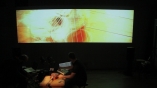
Artificiel’s "Three Pieces With Titles" “I had never seen such new things before. I didn’t even know what a new object could be,” the poet and art critic André Salmon wrote, after visiting the studio of Pablo Picasso in the spring of 1914. Of particular interest to Salmon was Guitar, a wall-mounted 3-D[...] Read more

Avatar Orchestra Metaverse FULL-TEXT AVAILABLE IN PRINT EDITION ONLY Avatar Orchestra Metaverse is a global collective making new music within the virtual-reality platform Second Life, an online three-dimensional program that allows users to interact through in-world avatars (users’ digital[...] Read more
BLACKOUT MUSIC Deep black space is speckled with birdcalls and falling water until an ominous boom looms and the drumming of rat-a-tat-tat - insect infestation or insistent rain - is jarring and subsides in the darkness a piano perforates the heavy steely[...] Read more

The Material Soundscapes of Roarke Menzies On a Sunday afternoon this past June I visited Outlet Fine Art, one of many independent galleries and performance spaces that have popped up in and around the Brooklyn neighbourhood of Bushwick in recent years. I was there to attend a performance by sound artist Roarke Menzies, the second in[...] Read more

Knoxville, Tennessee FULL-TEXT AVAILABLE IN PRINT EDITION ONLY As with any American city, the dominant feature of the Knoxville soundscape is the almighty car. With an extension of the interstate zooming only a few blocks from downtown, and a multi-lane surface road separating the University of[...] Read more
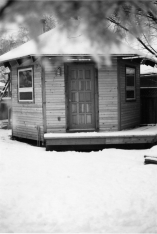
The Complex Stillness of Mark Ellestad “For me, there is a kind of stillness in music that comes from a generous and welcoming place. It has nothing to do with speed or style or tradition or school. It can come from dark or light, from any shade of intensity. It doesn’t need to express anything at all. I love it when[...] Read more