Featured Articles
Carmen Vanderveken is full of surprises Quebec-born composer Carmen Vanderveken was commissioned by the Dutch annual festival Gaudeamus Muziekweek to write a piece for a quartet featuring Dutch bass clarinetist Fie Schouten. An earlier piece sheds light on the shape and sound of the music Carmen Vanderveken is[...] Read more
Thierry Gauthier FULL-TEXT AVAILABLE IN PRINT EDITION ONLY “My artistic evolution,” Thierry Gauthier writes, “has been characterized by the intensity of impulse, immediacy, and the urgency to create; the quest for a paroxysm and the absolute; the same sense of urgency as[...] Read more

Lido Pimienta curates a sonic community Colombia-born, Toronto-based Lido Pimienta has been called “the consummate collaborator”—and with good reason. Although she writes, sings, produces, and plays many instruments—and is certainly talented and strong-willed enough to make recordings on her own—[...] Read more
Analia Llugdar FULL-TEXT AVAILABLE IN PRINT EDITION ONLY In her music, Montreal composer Analia Llugdar delves deeply into the primal interior of sound, as evidenced by a sampling of her work from 2003 to 2009. There are compositions for solo cello, small (trio) and large ensembles, often[...] Read more
Gil Delindro’s instruments of nature Earlier this year, an eight-foot-across circle of solid ice was hung from the ceiling of Winnipeg’s RAW: Gallery of Architecture and Design. Why would anyone in the world’s second-coldest city (after Ulan Bator, Mongolia) want that legendary cold brought indoors? The occasion was[...] Read more
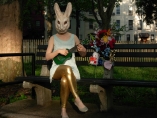
Jennifer Walshe Spins a Fine Tale The centenary of Dadaism is only three short years away, but there’s still time for curators and arts organizations across the world to program fitting tributes to the full multiplicity of artists involved in the movement. Irish radio, for example, will be honouring Dublin[...] Read more
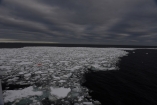
Cold Wave A sad-looking polar bear drifts on a shrinking ice sheet in a vast, deep-blue sea under a bright, blue sky. Scenes like this have long been used to illustrate climate change, and they are more than symbolic. Polar regions are warming at more than twice the rate of the rest of the world. The[...] Read more
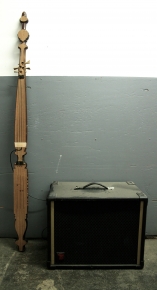
John Preus' Slow Sound On a brisk fall afternoon in October, about two dozen people hunkered down in the intimate main room of Chicago’s Experimental Sound Studio. They watched some of the city’s more open-minded musicians—including guitarist Leroy Bach and drummer Mikel Avery—improvise on[...] Read more
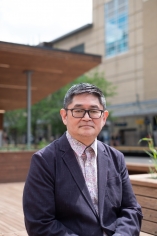
Ohama’s Alternative Dimensions Tona Walt Ohama has lived many lives. Born on a potato farm in Southern Alberta, he has spent the past forty years making passionate, deeply personal music while forging friendly connections with anyone who enters his orbit. Since his debut album, the 1982 cassette release Midnite News,[...] Read more

Qikiqtaaluk, Nunavut Mount Thor Sometimes the Arctic sun never goes down, never rises. Today though, in the middle of the Akshayuk Pass, I wake up just before the sunrays reach the thin layer of ice on my tent. It is early, dark, and cold. The wind is tirelessly beating against everything that[...] Read more
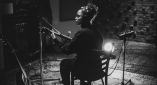
Kaïa Kater and the Creative Power of Letting Go Kaïa Kater is a gifted storyteller. Drawn to history, the Montreal-based musician and composer strings together tales that marry the elusive past with an ever-shifting present. From a young age, Kater, who studied cello and piano as a child, found refuge in songwriting. “I didn[...] Read more
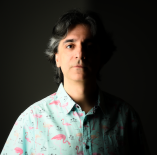
Panayiotis Kokoras’ Viper Snake Electronic music composers and pit viper snakes both create dramatic sounds that remind the listener of something that is not actually there. The Western Diamondback, the most common rattlesnake in Texas, can sound like a swarm of insects—or car radio static or steam escaping from a[...] Read more
- 16 of 35
- « first
- ‹ previous
- next ›
- last »